06.11.2025
When Markets Shake, Validators Earn: Staking Rewards Through the October 10th Liquidations
October 10 saw one of the sharpest deleveraging events of the year — cascading liquidations, ADL triggers, and isolated depegs rippled through DeFi and CEXs alike. Most of the conversation focused on infrastructure resilience and counterparty risk. But beneath that, something more telling was happening on-chain.
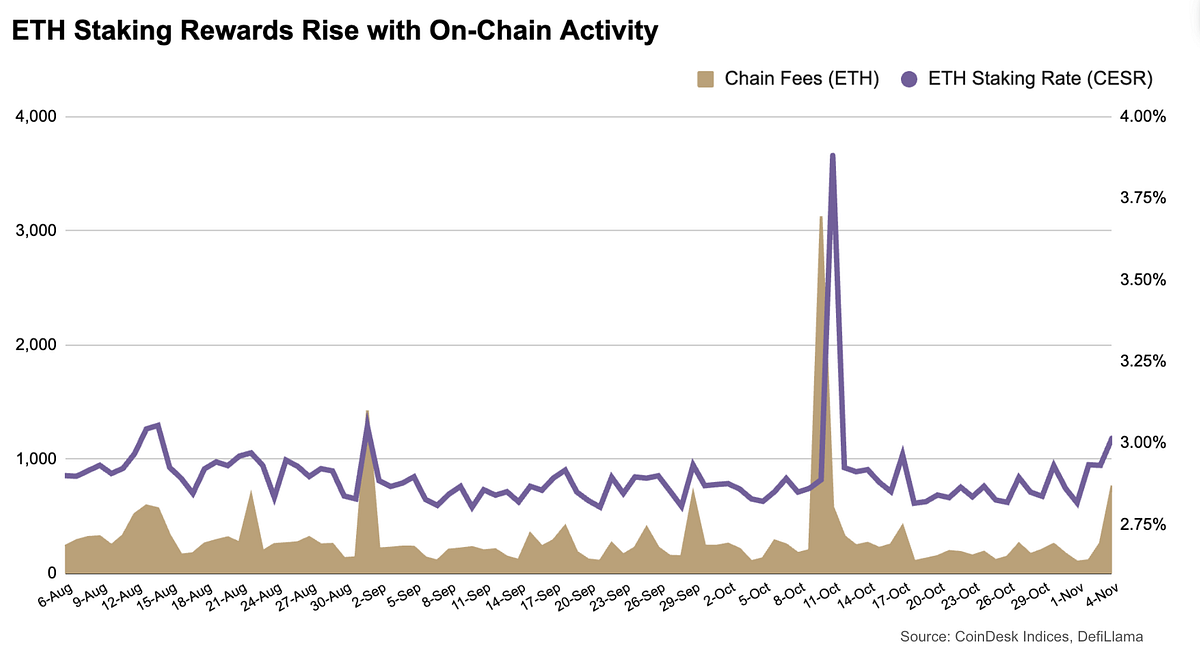
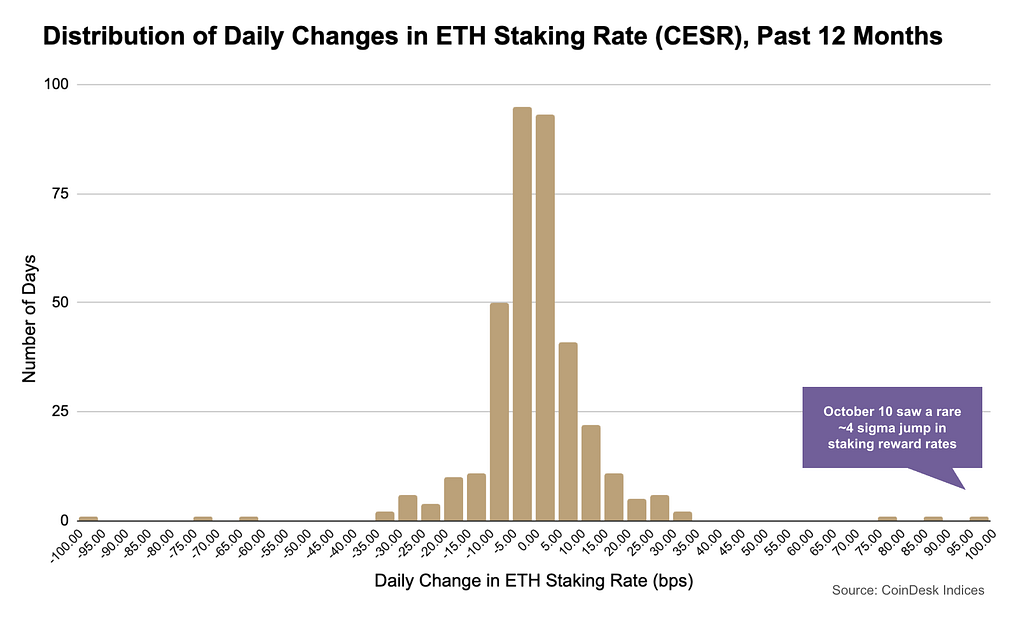
While positions were being unwound, Ethereum’s blockspace was in overdrive. DEX volumes spiked, liquidation bots scrambled, and transaction fees surged. Validators, who earn from these fees, suddenly found themselves on the profitable side of the chaos. For a brief 24 hours, staking rewards spiked nearly 1% — a four-sigma move — before normalising.
It was a reminder that staking yield isn’t static income; it’s dynamic cash flow tied to network activity. Volatility, congestion, and economic throughput all translate directly into validator revenue.
But here’s the bigger question: what if this were tradeable?
What if there were term instruments that allowed investors to lock in staking rates, or speculate on how long elevated rewards might last? How would funds, ETFs, or treasuries hedge or express views on staking yield?
We’re at the crux of staking’s evolution from a passive mechanism into an actively managed, tradeable asset class. Over $500 billion is now staked across networks — a scale that’s drawing in ETFs, ETPs, and institutional allocators. Yet the participants who stake aren’t necessarily the ones best placed to manage staking volatility.
That’s what we’re solving at Gyld.
We’re building the compliant, liquid term staking infrastructure to make staking rewards tradeable — and the first fixed-income-style exchange to facilitate it. Backed by Lightshift, partnered with leading custodians and validators, and led by Abbas Ali and Ruchir Gupta, Gyld is bridging staking and capital markets.
If this vision excites you, early registration is now open.